Interior Design Proposal Template: Scope Before Sign-Off
Interior design proposal template: map rooms, services, fees, revision rounds, and client decisions before you send a separate agreement.
By The Interior Design Kit by Cosmo Suite · Editorial policy
Published · 8 min read

On the page
- Room-by-room scope and deliverables, so the client can see what is included.
- Fee basis, review rounds, and client decisions, so the proposal can be discussed before an agreement is prepared.
- Exclusions and next steps, so extra services have a clear place in the conversation.
An interior design proposal template helps you present the work you are offering before a client decides whether to proceed. It should connect the brief to rooms, services, deliverables, fees, and decisions. A proposal presents your offer. An agreement records terms the parties accept.
The previous guide to interior design templates maps documents across a studio's client journey. Here, we will take one document apart and walk through a fictional living-room proposal, section by section.
Key takeaways
- Describe the work by room, service, and deliverable.
- Put the fee basis, review process, exclusions, and client inputs where the client can find them.
- Check that any agreement matches the proposal and has been reviewed for your local requirements.
What it holds
An interior design proposal gives the client a clear view of the work you offer. The ASID Code of Ethics and Professional Conduct says member contracts should set out the project scope, services, and fee method. Check those points as you prepare your offer. Then adapt it to your service and local rules.
| Proposal section | What the client should be able to find | Decision it supports |
|---|---|---|
| Project understanding | The rooms, goals, constraints, and information the proposal uses | Is this the project we discussed? |
| Scope by room | Services, deliverables, and exclusions | What work are you offering? |
| Process and reviews | Stages, client inputs, and review points | What will I need to decide, and when? |
| Fee and payment basis | What the fee covers and when payment is due | What am I agreeing to pay for? |
| Assumptions and next step | Open questions, offer period if used, and proposed next action | What needs confirmation before work begins? |
Use the table as an outline for your offer. The ASID Commercial Contracts Package breaks a commercial job into schedules for project details, design services, FF&E, purchasing, fees, termination, and other terms. Each studio must still set terms for its own work.
Start with the project understanding
Start with what the client asked for and what you understand the work to be. Name the property, rooms, client goals, and any limit that affects your offer. This gives both sides a chance to correct the brief before they review the fee.
For a living-room concept, the opening might name the room, the seating the client wants to keep, and a new colour and material direction. If the client also asked for lighting selections, say whether they are included. A visual reference should not imply work that is absent from the scope.
Separate known details from open questions. The client may need to confirm measurements, budget, decision makers, or whether another room belongs in the project. Put open items under assumptions or client inputs. If an answer could change the work, say who will confirm it and when.
Describe the scope by room and deliverable
The scope section connects each room to the work you will do and the material you will provide. The ASID Freelance Interior Design Business Guide 2026 recommends translating a service request into included outputs and decisions, with exclusions and client-supplied information stated plainly. A broad phrase such as “full design” leaves the client guessing.
Scope means the rooms, services, and deliverables in your offer. Write it so a client can compare it with the request they made. Deliverable is the item or file you promise to provide. Name it so the client knows what to review.
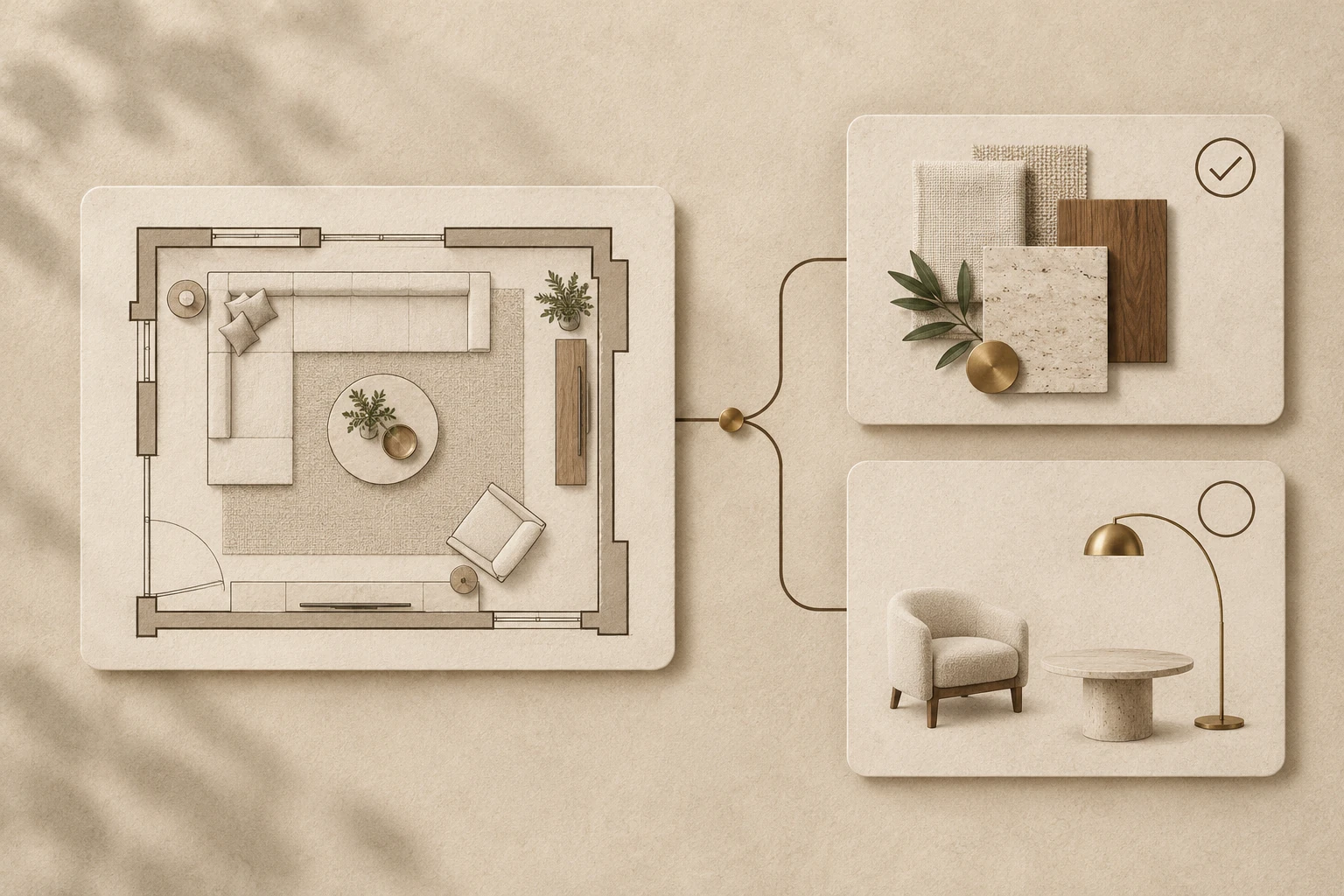
For the fictional living room, sort the client request into three columns: room, service, and deliverable. Add excluded work beside the offer. The client can then see what they are deciding and what needs a separate discussion.
| Client request | Proposal line | Client decision |
|---|---|---|
| Refresh the living room and explore a furniture direction | One concept presentation for the living room, with a palette and furniture direction; sourcing and purchasing are excluded | Review the direction, then decide whether to request a separate sourcing proposal |
This example is illustrative. It is not a client record or a recommended service package.
For a broader example, the scope could read like this:
| Area | Included service | Deliverable | Outside this proposal |
|---|---|---|---|
| Living room | Develop one concept direction using the agreed brief | Concept presentation with palette and furniture direction | Construction drawings, purchasing, and installation coordination |
| Living room | Review the concept with the client | One scheduled review and a written record of the chosen direction | Additional concept directions or later redesigns |
These are examples. Set limits for the work you sell. If you offer sourcing, purchasing, drawings, site visits, or installation oversight, say what each task covers and where your role ends. If a task is outside your offer, state that beside the room or stage.
1. Name the space and its limits
List rooms separately when the services differ. “Main floor” may leave it unclear whether the entry, dining area, or hall is included. A room label ties the work to one place and makes later changes easier to describe.
2. Pair each service with a deliverable
Name the action and the item the client receives. “Furniture selection” could mean a direction board, a list, sourcing links, or purchasing. Say which one you offer. If someone else must act on the work, name the file and the detail it will hold.
3. Put exclusions beside the scope
Place each limit next to the service it affects. A concept presentation may show a furniture direction while product sourcing and ordering stay outside the work. This is easier to read than a long list of exceptions at the end.
Explain the process and review points
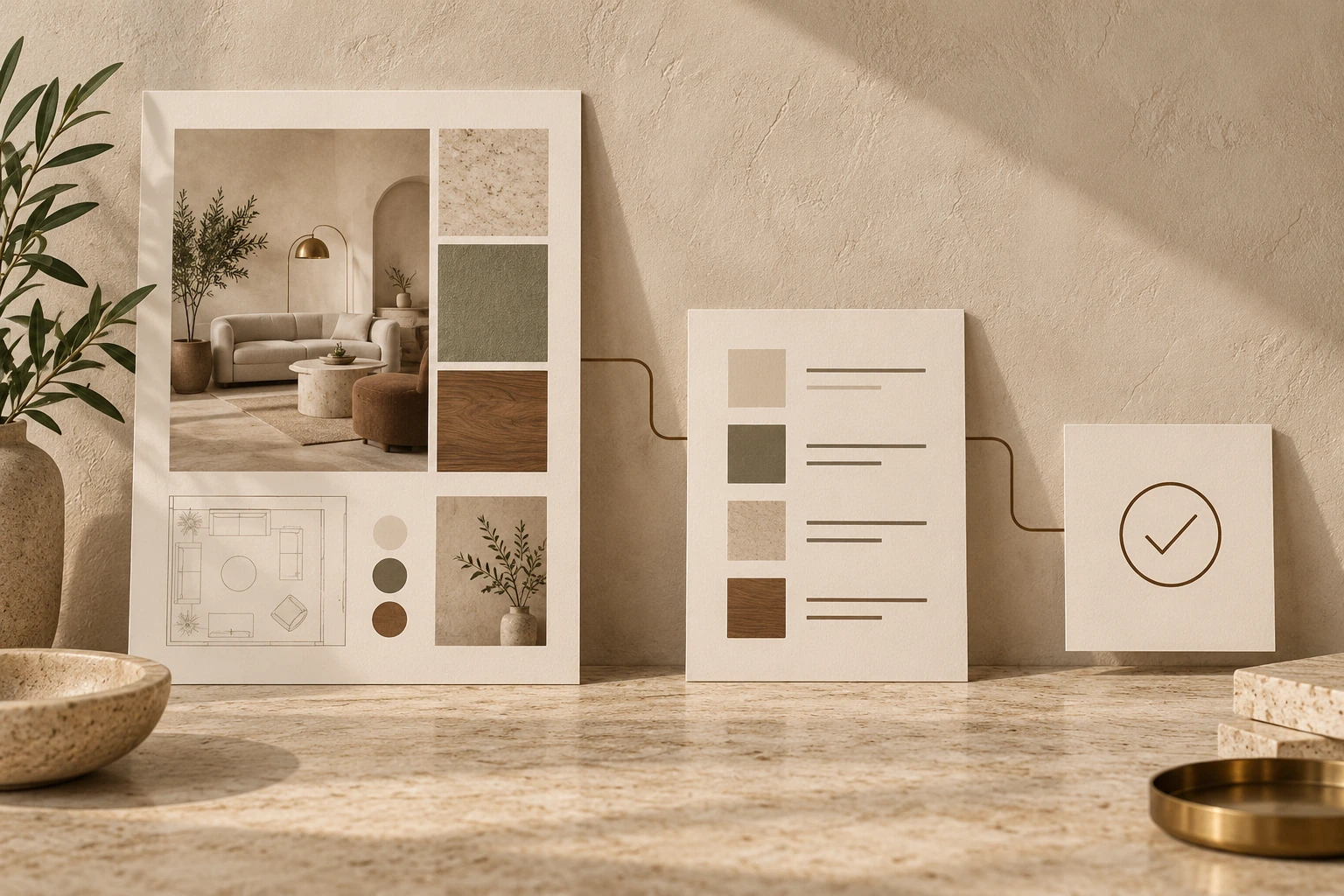
Show how the work moves from the brief to the next client decision. List the stages in your offer and mark where the client must respond. The ASID guide recommends setting out how clients approve a direction and how later requests become changes. Update any records tied to that change.
An illustrative sequence for a concept-only living room could be:
- Confirm the brief. The client checks the room, goals, existing items to retain, and open questions.
- Prepare the concept. The designer develops the agreed direction and presents the material for review.
- Record the decision. The client gives feedback or selects the direction through the agreed review process.
- Close or extend the scope. The studio confirms the next step. Further design development is proposed separately if it is outside the original offer.
This example is not a universal process. A studio that handles purchasing or construction work will need a different order and clear role lines. Describe the work you agreed to do. Name each client decision that affects the next stage.
Show fees and payment steps clearly
Tell the client how you set the fee, what it covers, and when payment is due. If the offer has more than one service or phase, link each fee to its work. Explain what a total covers.
Your proposal may list design fees apart from product purchases, shipping, third-party services, or other costs. Say if each is included, billed on its own, or outside the work. Call a product budget a confirmed quote only after you check the items and terms.
ASID's contract resources list possible compensation and purchasing structures. These are topics to settle in a project agreement, not a rate guide. Build your fee from the scope and the way your studio works. A proposal template cannot set your price.
Define reviews, revisions, and changes
If your offer includes feedback or revision rounds, say what the client reviews and what a round covers. For example, ask the client to respond to the concept as a whole. A new brief, added room, or new direction may need a different scope. Use terms that match your practice and agreement.
A revision round is a defined chance for the client to respond to work you presented. The ASID business guide advises making later requests and approvals visible, including which related records need an update. A written confirmation can identify the request, its effect on deliverables or timing, and the client's decision to proceed. Keep the procedure consistent with your documents and local advice.
Avoid loose phrases such as “revisions as needed.” The client should know what is included and how you will discuss work outside the scope. Your agreement should set out the terms for approving changes.
Make assumptions and next steps visible
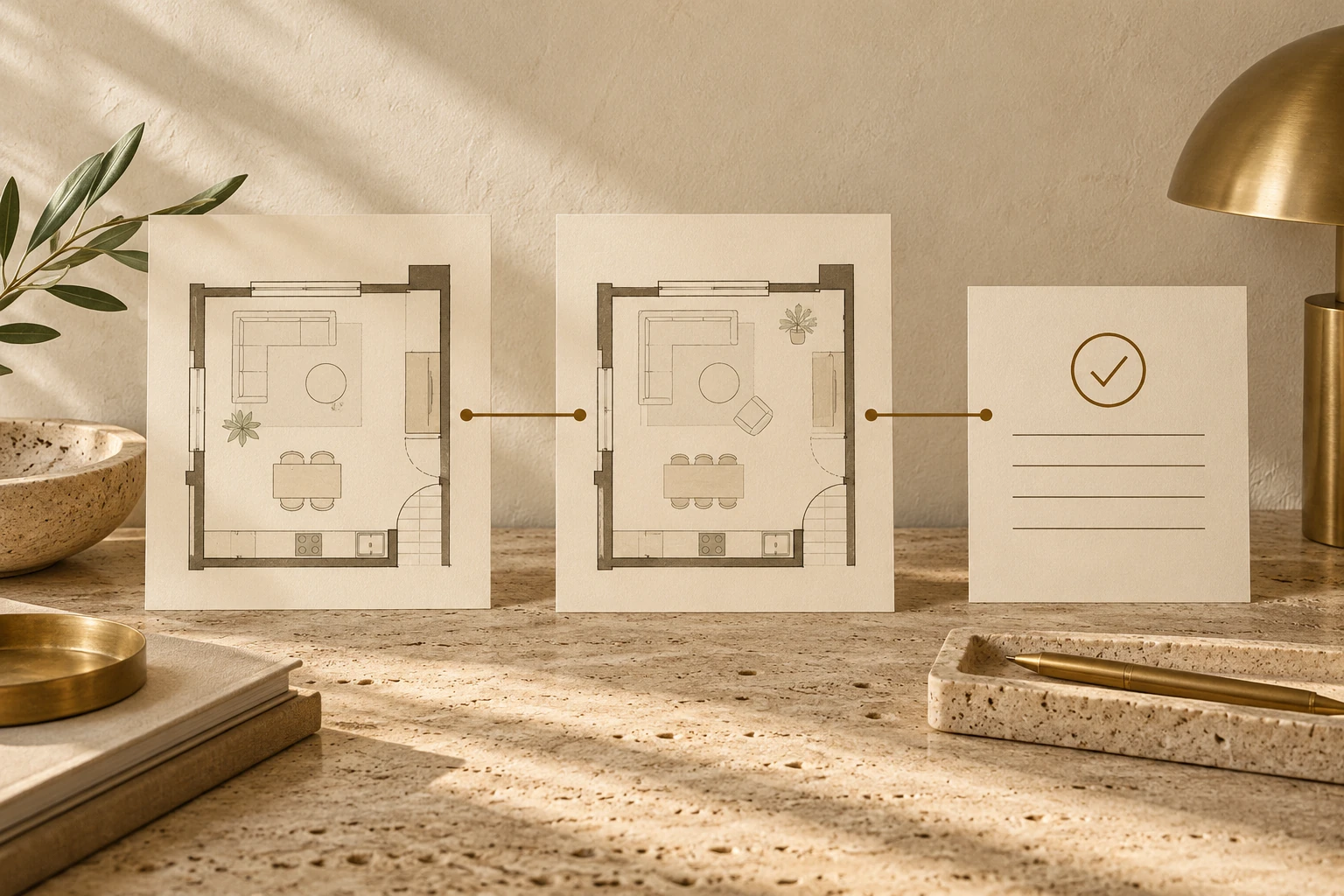
End with details that need confirmation and a clear next step. Assumptions may cover client details, an existing plan, or the timing of a decision. Include only points that affect your services or timeline.
If you use an offer date, state it plainly and follow your business terms. Explain what the client should do next: review the proposal, ask questions, or move to the agreement your process uses. A signed proposal may have a different effect in each place and situation.
Before sending, compare the proposal with the agreement, if you use one. Check that the client, project, rooms, services, fees, exclusions, and review process match. The ASID Code guides members on scope, services, and fees. Ask a qualified local professional to review the agreement for your situation.
Where The Interior Design Kit fits
The Interior Design Kit includes a Proposal & Agreement Suite with a project proposal and a three-page designer contract agreement, plus a photo and video release agreement. They are Canva documents in US Letter and A4 formats. The agreement is a starting template, not legal advice or a state-reviewed contract.
You can adapt the proposal to your services, then check that the separate agreement matches what you offered. The kit also includes a Client Discovery Suite with a client questionnaire, intake form, invoice, quotation, package pricing, and feedback form. See the documents included in The Interior Design Kit and review The Interior Design Kit for interior designers against your studio's workflow.
The site's editorial policy explains how its articles are reviewed and corrected. The About page has company and contact information.
The right proposal describes your work clearly enough for a client to make the next decision. Start with the room, add the deliverable, explain the fee basis, and show the review process. Then check the agreement with a qualified local professional.
Frequently asked questions
What should an interior design proposal template include?
Include the client's project goal, rooms in scope, services and deliverables, exclusions, fee basis, payment steps, a working timeline, review points, and the next decision. Adapt every section to the actual services you offer.
Is an interior design proposal the same as an agreement?
No. A proposal presents the work and terms you are offering. The agreement records the terms the parties accept. Their relationship and legal effect depend on the documents and local law, so have the agreement reviewed for your jurisdiction.
How do I describe scope in an interior design proposal?
Name each room or area, the service you will provide there, the deliverable the client will receive, and any client decision needed. Put excluded services beside the relevant scope so the boundary is easy to see.
Should a design proposal include revision rounds?
If your service includes a defined review process, describe what the client reviews and how many rounds are included. Explain how a new direction or added service is handled. Set the terms to match your practice and agreement.
How should I show design fees in a proposal?
State the fee basis, what it covers, when payment is due, and how purchasing or other costs are treated. Use the amounts and terms your practice has chosen. Do not present an illustrative example as a market rate.
Can I use a proposal template as a contract?
A proposal template can help you explain the work. It does not confirm that your document meets legal requirements. Use a separate agreement when your process requires one, and ask a qualified local professional to review the language before you rely on it.
Sources
Keep reading
Interior Design Business Templates
Interior Design Templates: What Each One Does
Interior design templates for client discovery, proposals, concept presentations, FF&E schedules, and project follow-up, matched to each stage of studio work.
· 8 min read

Interior Design Business Templates
Interior Design Contract Template: What to Include
Interior design contract template: set scope, fees, revisions, purchasing, and approvals clearly so clients know what is included before the work starts.
· 9 min read