Interior Design Client Questionnaire: Questions to Ask
Interior design client questionnaire: ask about rooms, daily use, budget, decisions, and timing before you shape a proposal or concept presentation.
By The Interior Design Kit by Cosmo Suite · Editorial policy
Published · 8 min read
On the page
- Questions about how clients use each room, what should stay, and what needs to change.
- A simple way to record budget, timing, project limits, and decision makers.
- A review step that turns answers into a useful meeting brief.
An interior design client questionnaire is a written set of questions that helps you prepare for a first design conversation. Ask about the project decisions you need to make, then use the meeting to clarify what a form cannot answer.
What should an interior design client questionnaire ask?
An interior design questionnaire should cover the project, rooms, daily use, priorities, budget, timing, and approvals. Each answer should help you define a service, prepare for a meeting, or identify something you still need to confirm.
| Topic | Ask the client | It helps you decide |
|---|---|---|
| Project | What prompted the project now? Which rooms are in scope? | Whether the request fits your services and where the work begins |
| People and use | Who uses each room, and what happens there on a normal day? | Which activities, storage needs, or access needs the design must support |
| Keep and change | What works now? What needs to change? Which pieces must stay? | What to retain, work around, or discuss before drawing |
| Style | Which images feel close? What do you like or dislike in them? | Which visual direction to explore and which references need context |
| Budget | What range are you considering, and what should it cover? | Whether to discuss priorities, phases, or a different service scope |
| Timing | Is there a date the room must be ready? What depends on that date? | Which dates are fixed and which rely on later decisions or orders |
| Decisions | Who will review the work and approve changes? | Who needs to be part of presentations and written approvals |
Collect enough detail to choose your next step, then use the meeting to fill the gaps. Houzz Pro’s interior design questionnaire guide also separates early questions, pre-consultation questions, and details to discuss in the initial meeting.
For a practical framework, think of each answer as a note beside a future design decision. “We need more storage” is a starting point. “Coats and shoes collect by the entry” gives you a place to investigate. The interior design document sequence by project stage can help you see where discovery ends and later client documents begin.
If you are making those documents from scratch, a ready-made set of interior design client documents can give you an editable starting point for discovery and later project steps.
Separate enquiry details from discovery questions
An intake form collects basic contact and project details; a discovery questionnaire explores how the client lives and what the project needs. Keeping the two jobs distinct makes the first contact easier to complete and the design conversation easier to prepare.
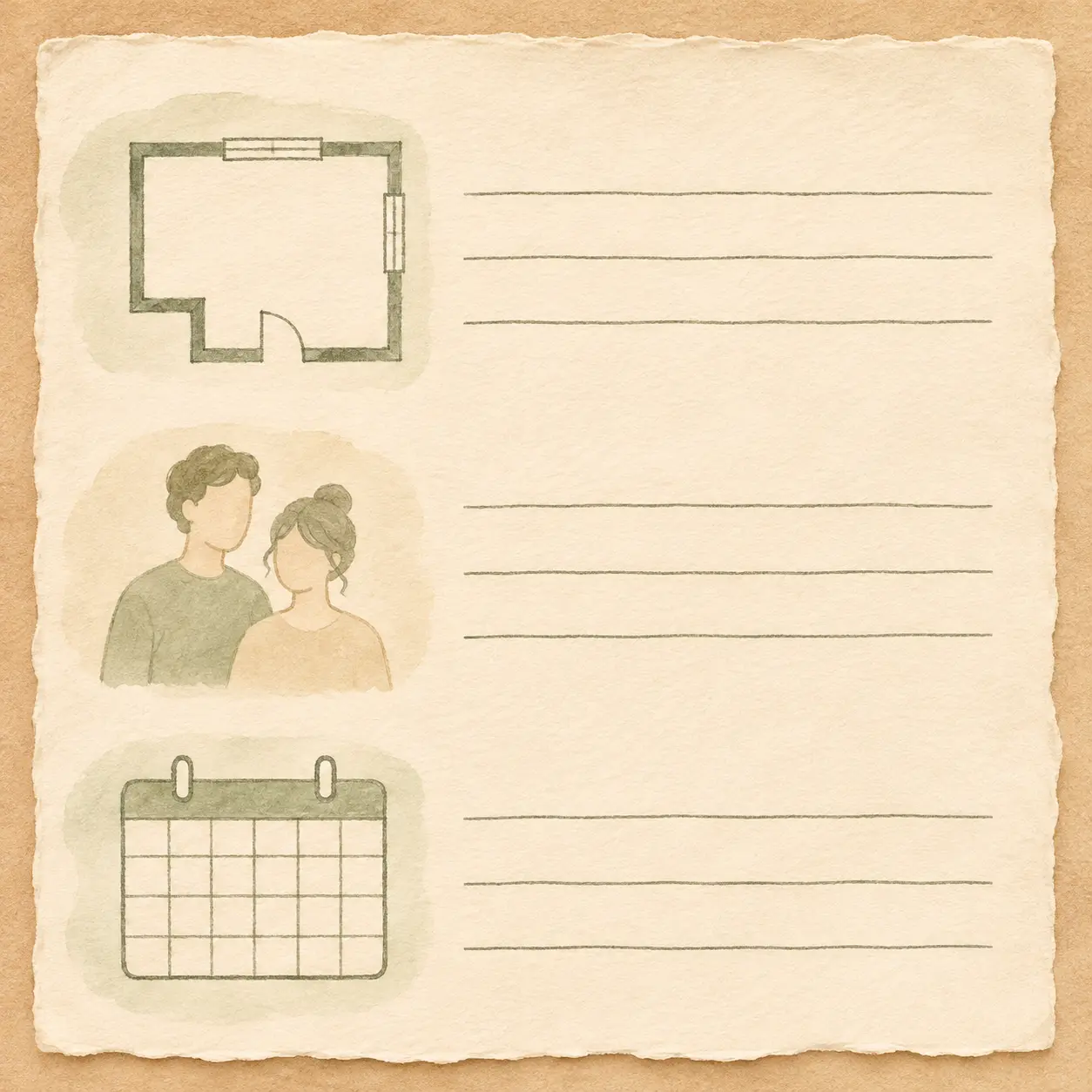
An enquiry form can ask for the client’s name, preferred contact method, property location, rooms of interest, and a short description of the request. Use those answers to decide whether to book a call or request more information.
The fuller questionnaire can follow when the enquiry looks like a possible fit. It can ask how the household uses the space, what should remain, the client’s priorities, budget expectations, dates, and how decisions will be made. This is the material you want to review before a discovery meeting.
Avoid sending a long list of detailed design questions before you know what service the client is considering. Houzz Pro’s 2026 guide places questions across discovery calls, pre-consultation, and the first meeting. That staged approach gives you room to ask the right level of detail at each point.
The form does not have to be digital. A document, a shared form, or a conversation can work, depending on your studio. Choose a format the client can use and that lets you keep the answers with the project record.
Ask about the room before asking for a style label
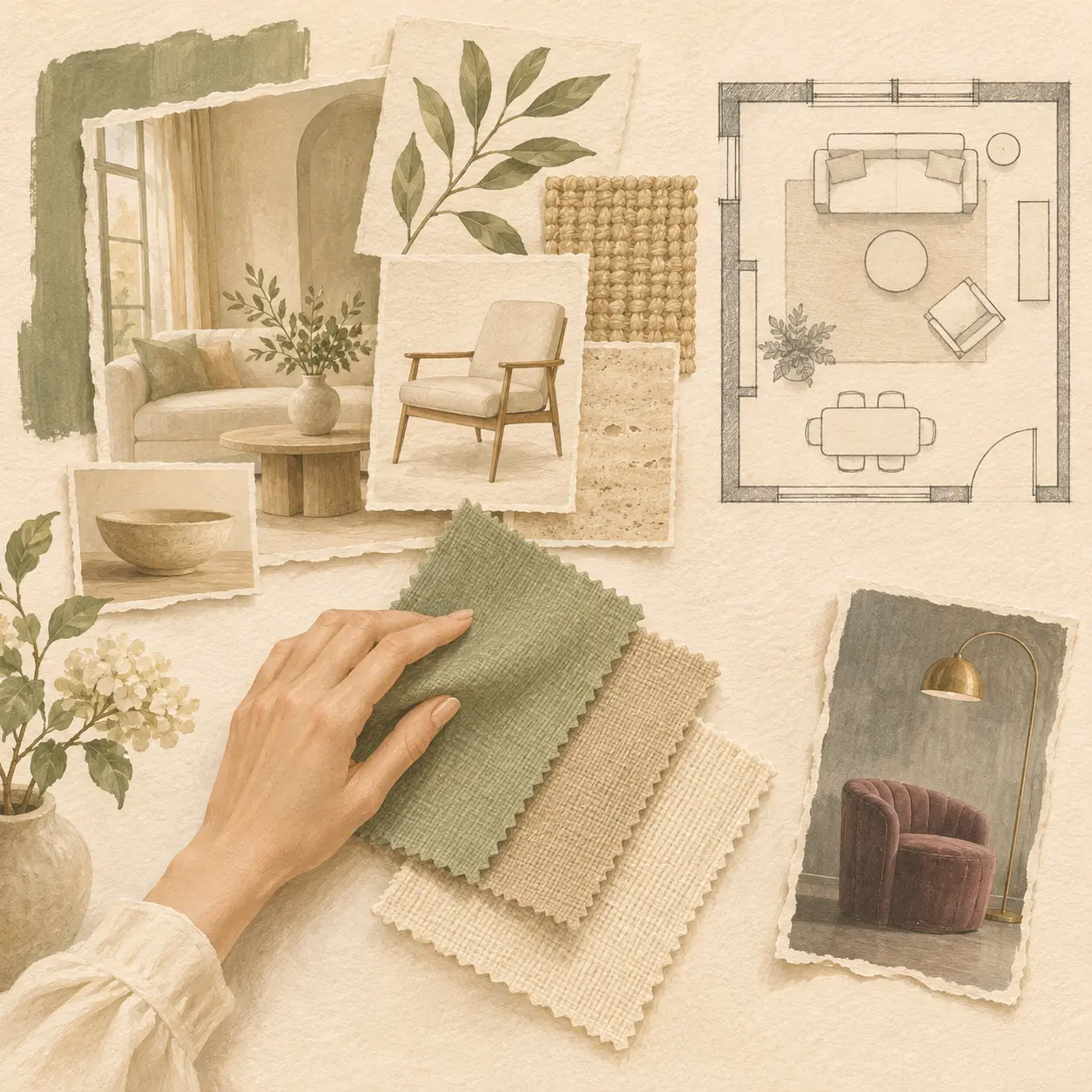
Start with what happens in the room and what is difficult today, then ask for images or words that help describe the desired feeling. Daily use gives a style preference context you can apply to the plan.
Try questions like these:
- Who uses this room, and what do they do here?
- When does the room feel easiest to use?
- What is frustrating or awkward about it now?
- What do you reach for often, and where do you keep it?
- Which furniture, art, or materials should stay?
- Can you share a few images you like? What stands out in each one?
- Is there a color, finish, or material you already know you want to avoid?
Ask the client to explain an image rather than treating the image as a complete brief. They may like its light, a particular fabric, or the amount of open space. Those details can point in different directions. Record the reason beside the image.
For each room, leave space for “unknown” or “to discuss.” A client may not know whether a piece can move, whether a wall can change, or which item should take priority. Your next step may be to inspect the site, check a measurement, or show a choice during the concept stage.
An illustrative living room example: the client wants to keep a sofa, needs a clearer path to the patio, and shares images with very different colors. The useful follow-up is to ask which parts of the room feel crowded and what they like in each image. You can then separate the circulation problem from the color preference before developing a concept.
Make budget and timing answers usable
Ask for a budget range and what it includes, then record how certain the client feels about it. A number without its boundaries can mean different things to the client and designer.
You might ask:
- What range are you considering for this project?
- Should that range include furnishings, materials, and delivery, or only some of them?
- Are there items you already own or plan to buy separately?
- Is there a date the space needs to be ready? What makes that date important?
- Would you consider working in phases if the full scope does not fit the current range?
Do not turn a rough answer into a promise or quote. Write “client to confirm” when the amount, inclusions, or timing needs a conversation. Then explain how you will prepare a proposal based on the services and decisions still open.
Keep the timeline question practical. A move, a family event, or a planned renovation may set a date, while product availability and approvals can affect what happens before it. Ask what is fixed and what can move. You can then separate a client’s target date from dates your proposal can support.
If a client is unsure about a budget, invite them to describe priorities. Which room matters most? Which existing pieces should the design work around? Which decisions can wait? Those answers can shape a phased conversation without implying that every request will fit.
The interior design proposal guide shows how to list rooms, services, deliverables, and exclusions after discovery. Keep the questionnaire exploratory. Put the agreed scope and fee in the proposal.
Find out who decides and how work gets approved
Ask who will review the design, who can approve spending, and how the client wants to give feedback. These answers tell you who should attend each decision point and what needs written confirmation.

Useful prompts include:
- Who will use the space and offer feedback?
- Who gives final approval on the design and purchases?
- Does anyone need to review a decision before it is final?
- How would you like to receive options and send comments?
- What helps you feel ready to choose between options?
Do not assume that the person who first contacts you is the only decision maker. Ask how the client wants other people involved. If several people will respond, agree on who will collect the feedback and send the final direction.
The questionnaire is a discovery record, not the approval itself. When the client chooses a direction or approves a change, note the decision in the project record and follow your studio’s written process. Keep the approval record with the project documents you use when preparing the agreement.
Keep the questionnaire focused and considerate
Keep only the information that helps you scope the work, prepare the meeting, or deliver the service. The Federal Trade Commission’s small business guide to protecting personal information advises businesses to keep only information they need and protect the information they retain.
For a design enquiry, you may need a way to contact the client and enough project information to understand the request. Avoid collecting personal details that do not affect the work. If you need photographs, measurements, or household information, explain why you are asking and how the client can share them.
Use plain language. Replace “What is your design aesthetic?” with a question about the images, colors, or rooms the client responds to. Let them skip a question they cannot answer yet. A blank answer can become a useful topic for the conversation.
Test the form yourself before sending it. Check that the client can tell which questions are required, where they can add context, and how to return the answers. Remove repeated questions. If two questions lead to the same decision, keep the clearer one.
Turn answers into a meeting brief
Before the meeting, group the answers into confirmed details, open questions, and decisions that need the client’s input. This turns a completed questionnaire into a short agenda for the conversation.
Use three headings in your working notes:
| Note group | What belongs there | Meeting use |
|---|---|---|
| Confirmed | Rooms, priorities, pieces to keep, stated budget range, and target dates | Check that you understood the client |
| To clarify | Unclear scope, missing measurements, conflicting references, or unknown costs | Ask focused follow-up questions |
| Decision needed | Service fit, project phase, approvals, and next document | Agree on the next step |
For the illustrative living room example, the confirmed notes might say the sofa stays and the patio route matters. The images point to more than one color direction, so that belongs under “to clarify.” The meeting can focus on the room’s circulation and which visual references matter most.
After the meeting, update the record with what the client confirmed. Use it to prepare a proposal that names the rooms, services, deliverables, and exclusions. Keep facts the client supplied separate from assumptions you still need to check.
A set of interior design templates for client work can help keep those discovery notes alongside the proposal, agreement, and project schedule.
Where The Interior Design Kit fits
The Client Discovery Suite included in The Interior Design Kit contains a four-page client questionnaire, a client intake form, a service invoice and quotation, package pricing pages, and a feedback form. The questionnaire supports discovery; the intake form records basic client details.
The templates are Canva documents. They are not a client portal, live database, or automatic intake system. Use them as editable starting documents, then adapt the questions to your services and the project in front of you.
This article is published by Cosmo Suite, the company that makes The Interior Design Kit. Read the editorial policy for information about this publication.
Sources
- Free Template: Interior Design Client Questionnaire & Guide, updated 26 February 2026, checked 4 November 2026.
- ASID Interior Design Residential Contract Package, checked 4 November 2026.
- Protecting Personal Information: A Guide for Business, Federal Trade Commission, checked 4 November 2026.
Frequently asked questions
What should an interior design client questionnaire include?
Ask about the project, rooms, who uses the space, what should stay, budget, timing, design preferences, and who approves decisions. Add only questions that help you define the work or prepare for the meeting.
When should I send an interior design questionnaire?
Send a short intake form when a new enquiry arrives. Send the fuller questionnaire once the project looks like a possible fit and before your discovery meeting, so you can use the meeting to clarify answers.
How long should an interior design client questionnaire be?
Keep it as short as you can while still covering the decisions you need to make. Use plain questions, group related topics, and leave space for an answer the client cannot give yet.
Should a client questionnaire ask about budget?
Yes. Ask for a working range and what it needs to cover, such as design fees, furnishings, or project work. If the client is unsure, record that and explain how you will discuss the range.
What is the difference between a questionnaire and an intake form?
An intake form records basic contact and project details. A questionnaire explores how the client uses the rooms, what they want to change, their constraints, and how they make decisions.
Should I ask every client the same questions?
Use a shared core, then add questions for the rooms and services in scope. A kitchen, a bedroom, and a furnishing-only project do not need identical follow-up questions.
Sources
Keep reading
Interior Design Business Templates
Interior Design Templates: What Each One Does
Interior design templates for client discovery, proposals, concept presentations, FF&E schedules, and project follow-up, matched to each stage of studio work.
· 8 min read
Interior Design Business Templates
Interior Design Proposal Template: Scope Before Sign-Off
Interior design proposal template: map rooms, services, fees, revision rounds, and client decisions before you send a separate agreement.
· 8 min read

Interior Design Business Templates
Interior Design Contract Template: What to Include
Interior design contract template: set scope, fees, revisions, purchasing, and approvals clearly so clients know what is included before the work starts.
· 9 min read